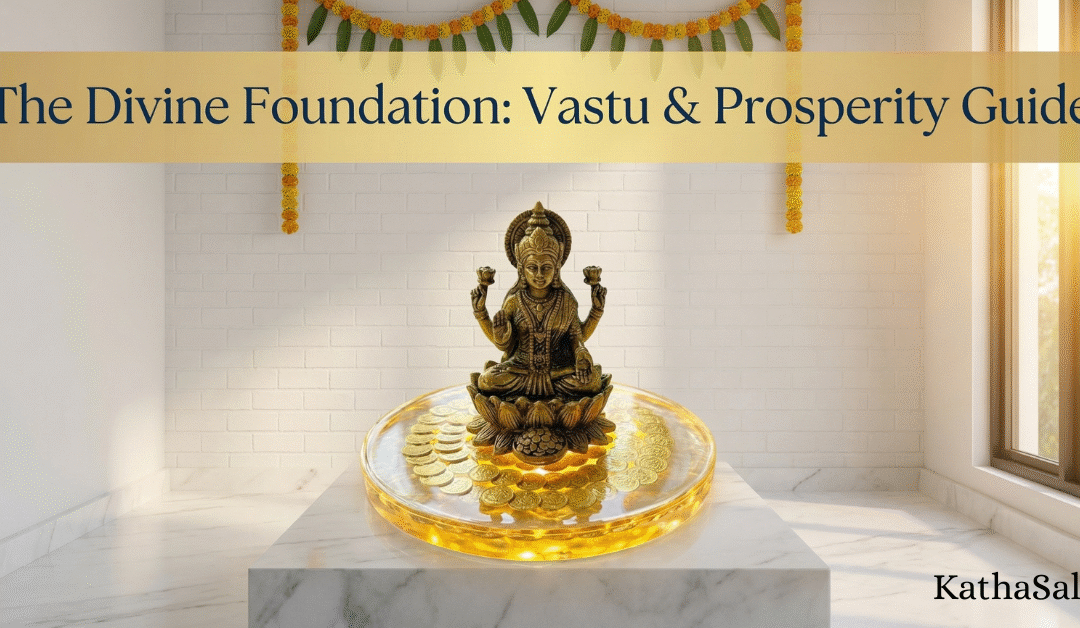
In every Indian home, the Pooja Mandir is the epicenter of energy. But have you ever wondered if the foundation of your idols is as sacred as the prayer itself? A Pooja Chowki (also known as a Bajot or Pooja Peeta) is not just a piece of furniture; it is the “Asana” or divine seat that bridges the gap between the devotee and the deity.
1. Why Every Home Needs a Sacred Pooja Chowki
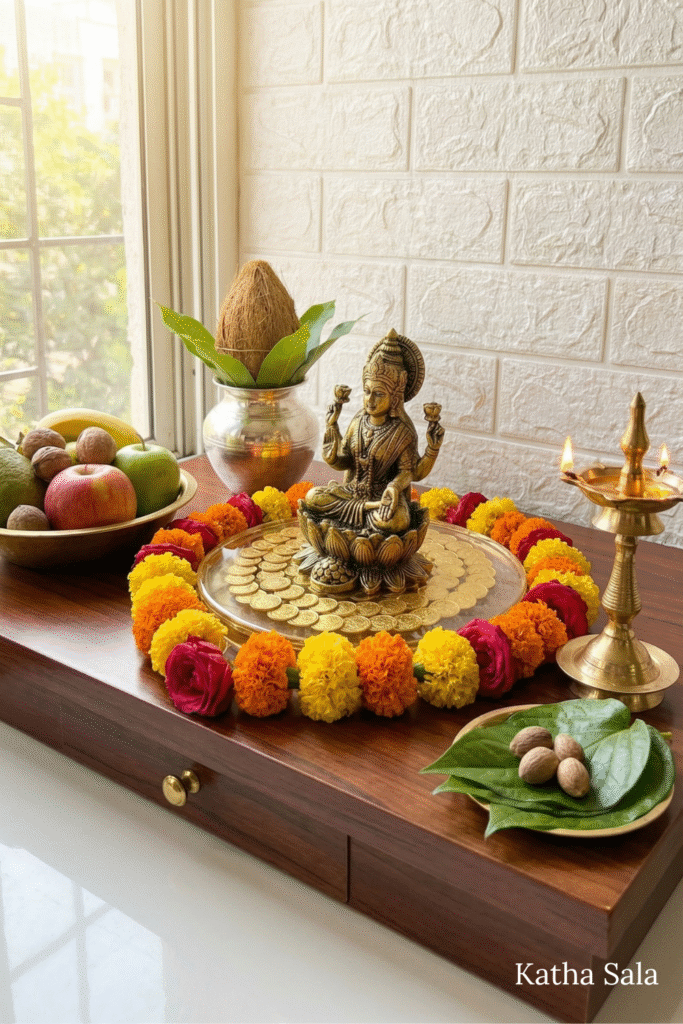
According to Vastu Shastra, deities should always be seated at a level higher than the floor to show reverence.
- Energy Concentration: A chowki acts as a “spiritual antenna,” concentrating the vibrations of your mantras and prayers within its boundaries.
- Stability: A firm pedestal symbolizes a stable life and stable finances.
- Vastu Balance: Correct placement of a chowki helps in neutralizing Vastu Doshas in the North-East corner of your home.
2. Types of Pooja Chowkis and Their Benefits
Choosing the right material for your chowki can significantly impact the “vibe” of your prayer room.
| Material | Spiritual Significance | Maintenance |
| Wood | Traditional, warm, and natural. Best for daily use. | Needs regular polishing; sensitive to moisture. |
| Brass | “Satvik” metal; known to attract divine frequencies. | Tarsnishes quickly; needs constant cleaning. |
| Marble | Symbolizes purity and coolness; very stable for heavy idols. | Can stain if oil or kumkum is spilled. |
| Resin Art | Modern & Highly Durable. Best for intricate designs. | Waterproof, scratch-resistant, and maintains a lifelong shine. |
3. The Revolutionary 108 Lakshmi Coin Peeta
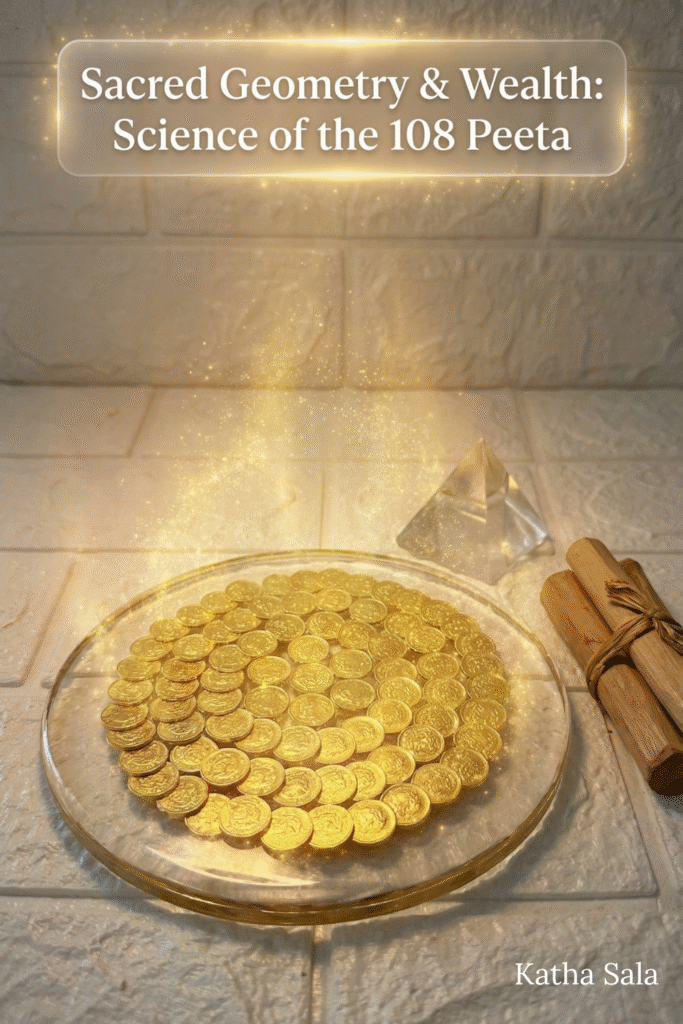
While standard chowkis are passive, the Lakshmi Peeta by Katha Sala is an active spiritual tool.
What makes it unique?
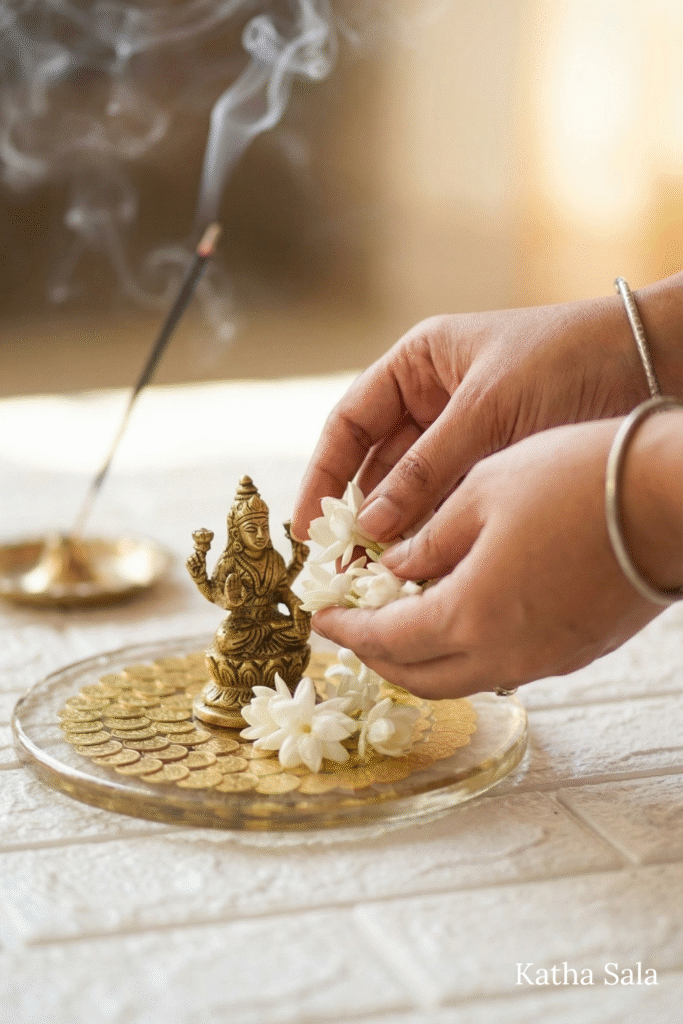
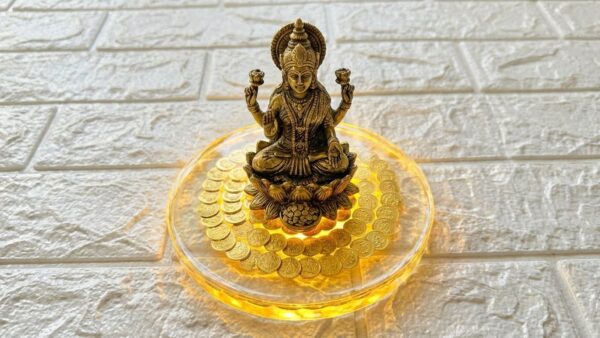
It features 108 Lakshmi Coins embedded within premium resin. In Vedic science, 108 is the number of cosmic completion.
- Wealth Attraction: The 108 coins create a “Dhana-Akarshana” grid, turning your Pooja Chowki into a magnet for wealth.
- Resin Protection: Unlike metal coins that turn black over time, these coins are sealed, meaning their “Golden Glow” (which represents prosperity) never fades.
- Multi-Purpose: Use it for your Lakshmi Puja, as a base for your Kalash, or place it at your Main Entrance to invite “Sthira Lakshmi” (wealth that stays).
Why Choose the Lakshmi Peeta? A Quick Comparison
Many people assume any stand will do for their idols. However, choosing the right Pooja Chowki can make a significant difference in the energy and maintenance of your sacred space.
| Feature | Regular Wood / Metal Chowki | Katha Sala Lakshmi Peeta |
| Spiritual Power | Neutral (Acts only as a stand). | High (Acts as a Wealth Magnet). |
| Coin Frequency | None. | 108 Lakshmi Coins (Vedic 108 energy). |
| Durability | Wood can rot; Metal can tarnish/rust. | Lifetime Shine (Sealed in premium Resin). |
| Water & Oil Proof | Absorbs oil and water, causing stains. | 100% Waterproof and stain-resistant. |
| Vastu Benefit | Basic elevation. | Active Dhana-Akarshana (Wealth Attraction). |
| Maintenance | Needs frequent polishing or scrubbing. | Easy to Clean (Just wipe with a soft cloth). |
| Pest Resistance | Prone to termites or wood borers. | Pest-Proof and non-corrosive. |
| Visual Appeal | Common, mass-produced designs. | Exclusive Resin Art (Unique & Luxurious). |
4. Vastu Tips for Your Pooja Chowki Placement
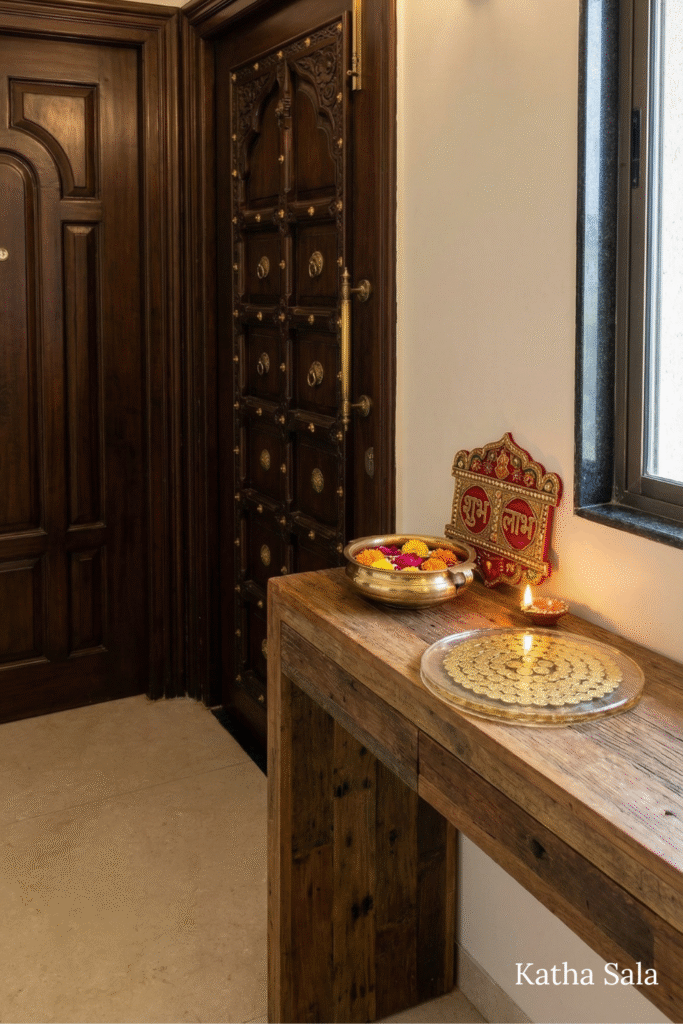
To get the maximum benefit from your Lakshmi Peeta, follow these Vastu guidelines:
- The Golden Corner: Always place the chowki in the North-East (Ishanya) direction. This is the zone of Lord Shiva and Jupiter, bringing wisdom and wealth.
- Facing Direction: Arrange the chowki so that the idols face West, allowing you to face East while praying.
- The Entrance Secret: If you have financial blockages, place a 108-coin Lakshmi Peeta on a small shelf near your main door. It acts as a guard against “Daridra” (poverty) energy.
5. How to Care for Your Sacred Peeta
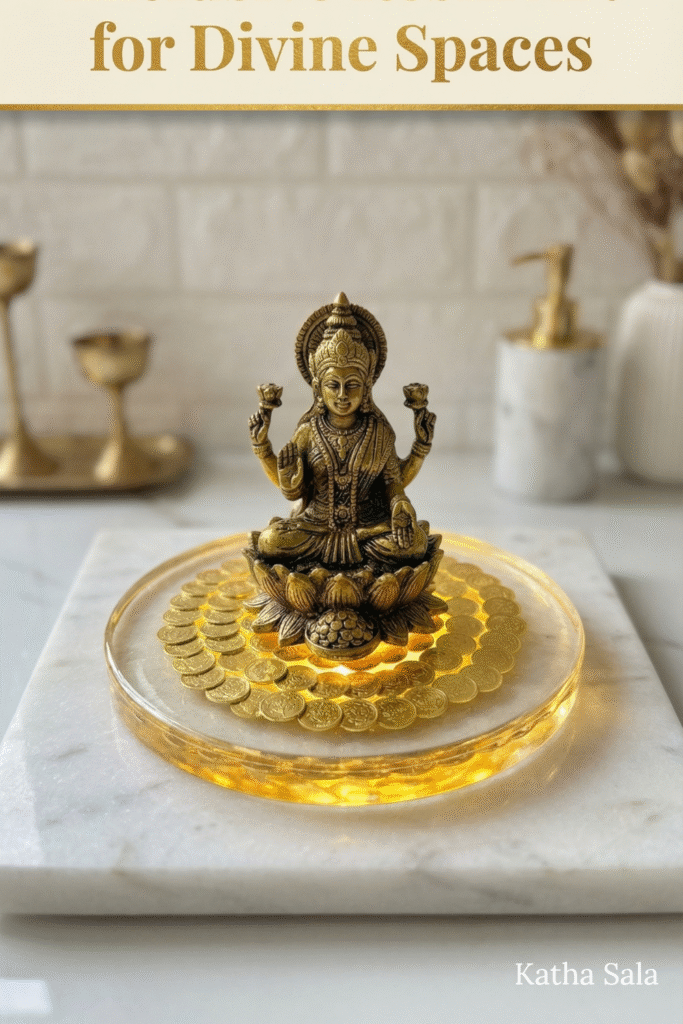
To maintain the sanctity and beauty of your Pooja Chowki:
- Daily Dusting: Use a soft microfiber cloth to keep the surface clear.
- Avoid Harsh Chemicals: For resin-based Lakshmi Peetas, a simple damp cloth is enough. Do not use acidic cleaners.
- Activation: Once a week (preferably Friday), place a few fresh lotus petals or marigolds on the 108 coins to keep the energy active.
Conclusion: Don’t Settle for Ordinary
Your devotion deserves the best foundation. A simple wooden block might hold an idol, but the Lakshmi Peeta with 108 Coins holds a promise of prosperity. Don’t let your daily prayers go without the power of the sacred 108.
Transform your home’s energy today. Bring home the original Lakshmi Peeta from Katha Sala.
-
Brahma Kamal Flower Idol Stand for Pooja Room
Original price was: ₹3,599.00.₹2,499.00Current price is: ₹2,499.00. -
Lakshmi Kamal Flower Idol Stand for Pooja Room
Original price was: ₹3,599.00.₹2,499.00Current price is: ₹2,499.00. -
Lakshmi Peeta Idol Stand with 108 Lakshmi Kubera Coins
Original price was: ₹2,699.00.₹1,499.00Current price is: ₹1,499.00.
FAQs on Pooja Chowki & Peeta
1. Does the shape of the Pooja Chowki matter (Square vs. Round)?
Yes, shapes carry different energies.
Square/Rectangular Chowkis: Represent stability and the “Prithvi” (Earth) element. They are ideal for placing heavy idols of Lord Ganesha or Goddess Lakshmi to ensure “Sthirta” (permanence) in the house.
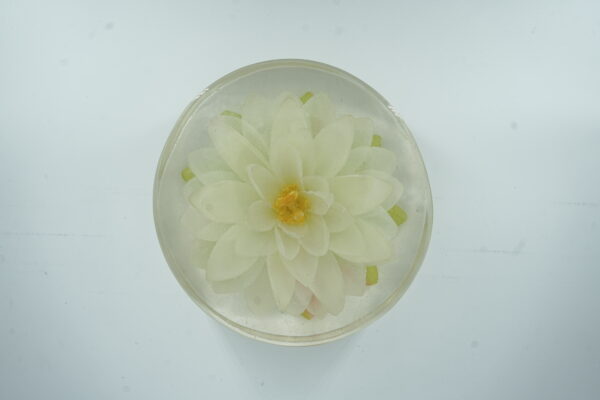
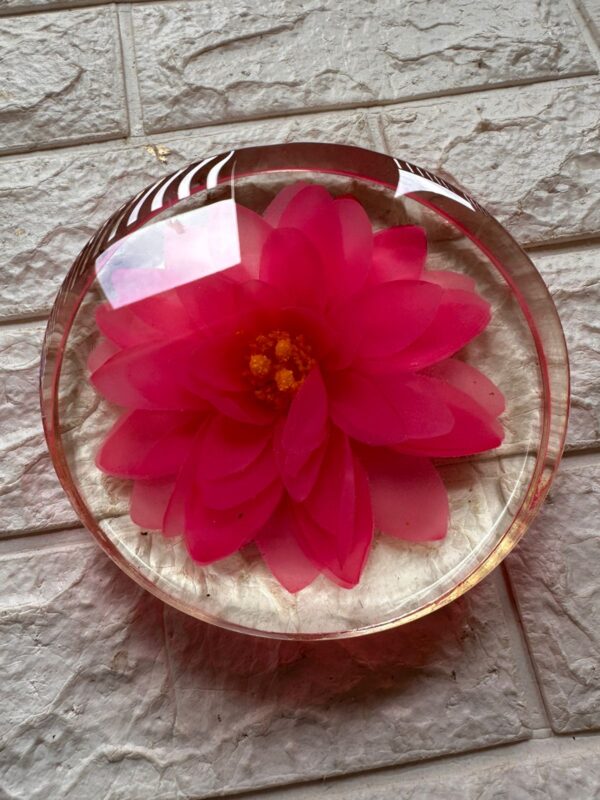
Circular Peetas (like the Lakshmi Kamala): Represent the flow of energy and the “Brahmanda” (Universe). A circular lotus-shaped peeta is specifically designed to radiate energy in all 360 degrees, making it perfect for wealth attraction.
2. What is the ideal height for a Pooja Chowki according to Vastu?
A Pooja Chowki should ideally be between 1 to 4 inches high. The goal is to ensure that the base of the idol is higher than the floor but lower than your chest level when you are sitting down to pray. Our Lakshmi Peeta is designed with this optimal height to ensure your gaze is naturally directed at the deity’s feet.
3. Can I place multiple idols on a single large Pooja Chowki?
While you can place a “Panchayatan” (a group of five deities) on one large chowki, it is spiritually better to have a dedicated pedestal for your “Ishta Devata” (primary deity). If you are using the 108-coin Lakshmi Peeta, it is highly recommended to keep it exclusively for Goddess Lakshmi, a Kalash, or your wealth-related symbols to keep the energy focused.
4. Is it okay to perform “Abhishekam” (liquid offerings) on a Resin Pooja Chowki?
This is a very specific advantage of our product.
Wooden Chowkis: Water and milk seep into the wood, causing it to rot and smell over time.
Katha Sala Resin Peeta: It is non-porous and 100% waterproof. You can perform Abhishekam with water, milk, or honey, and simply wipe it dry. It will not damage the 108 coins or the surface.
5. Can I move the Pooja Chowki once it is placed?
In Shastra, once a “Sthapana” (installation) is done, it is best not to move the pedestal frequently. However, for cleaning purposes, you can move it. Pro Tip: If you are moving the Lakshmi Peeta, always do it on a Friday or an auspicious Hora, and chant “Om Mahalaxmiye Namah” while repositioning it to maintain the energy.
6. Why is the base of the Pooja Chowki just as important as the top?
99% of people overlook this. A chowki must have a “balanced” base. If a chowki wobbles, it symbolizes instability in the home’s finances. Our Lakshmi Peeta is crafted to be perfectly level, ensuring that the 108 coins stay in a flat, harmonious grid to stabilize your home’s “Vastu Purusha.”
7. What should I do if my old wooden Pooja Chowki is cracked?
A cracked or broken (Khandit) chowki should never be used in a Pooja room as it attracts “Daridra” (poverty) energy. If your current pedestal is damaged, it is a sign that it has absorbed negative energy. You should immerse the old one in flowing water (Visarjan) and replace it with a fresh, durable material like resin.
8. Can I use a Pooja Chowki for my “Dhanteras” or “Varalakshmi” Vrata?
Absolutely. In fact, these festivals are the most auspicious times to introduce a 108-coin Lakshmi Peeta. Using a specialized coin-embedded chowki during Varalakshmi Vrata is said to multiply the blessings of the Vrata by manifold.
9. Should I cover the Pooja Chowki with a cloth?
While traditional wooden chowkis are often covered with red cloth, the beauty and energy of the 108 Lakshmi Coins in our Peeta are meant to be seen. You do not need to cover it. The golden coins themselves act as the “Vastra” (clothing/ornament) for the pedestal.
10. What is the significance of the “Lotus” design in a Pooja Chowki?
The Lotus (Kamala) is the only flower that remains pure even in muddy water. A Lotus-shaped Pooja Chowki signifies that even amidst the “Samsara” (worldly struggles), your home and your wealth will remain pure, untouched by negativity, and ever-blooming.