
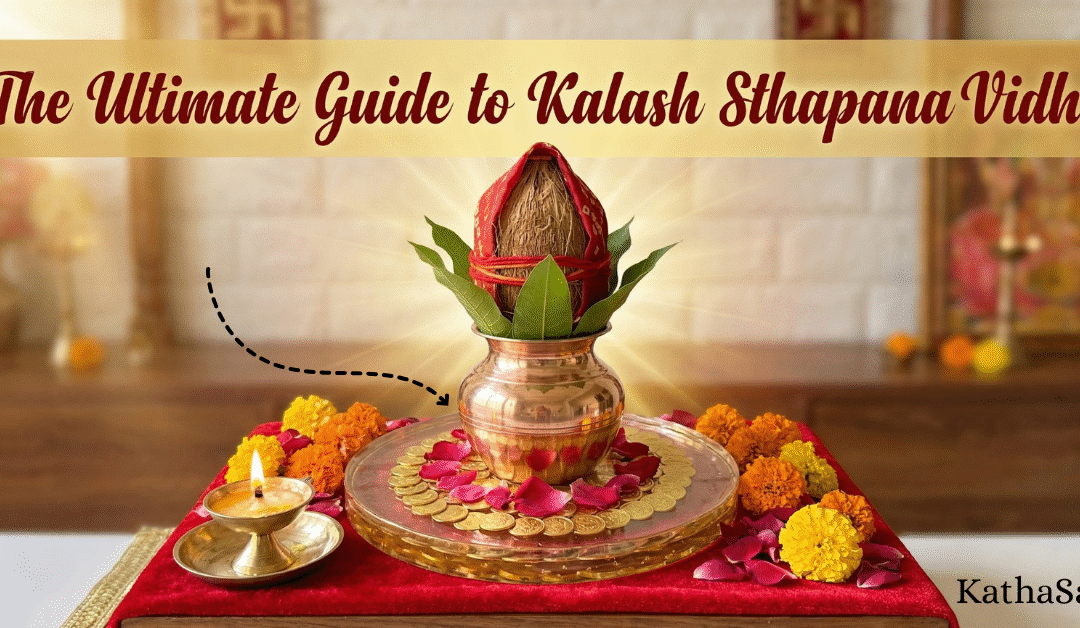
Guide to Kalash Sthapana Vidhi: In every Hindu household, the commencement of any auspicious event—be it Navratri, Diwali, a Wedding, or a Gruhapravesha (Housewarming)—is marked by the establishment of the Kalash. This sacred pot is not merely a vessel; it is a physical manifestation of the divine, a “Purna-Kumbha” representing the infinite abundance of the universe.
However, performing Kalash Sthapana is more than just a ritualistic step. It is an art of aligning energy. If done correctly, it invites peace and wealth; if ignored or done haphazardly, the spiritual vibrations of your puja room may remain grounded.
In this in-depth guide, we explore the deep secrets of Kalash Sthapana, the stories from our Puranas, and the critical role of the Lakshmi Peeta in preserving the sanctity of your home.
1. The Deep “Katha”: The Origin of the Amrit Kalash
At Katha Sala, we believe that understanding the why behind a ritual makes the how more powerful.
The history of the Kalash dates back to the Samudra Manthan, or the Churning of the Great Ocean. As the Devas and Asuras worked together to find the nectar of immortality, fourteen gems (Ratnas) emerged. The final and most precious gem was Lord Dhanvantari, the physician of the Gods, appearing with a golden Amrit Kalash in his hands.
This vessel contained the life-force of the universe. Spiritually, the Kalash represents:
- The Metal Body: The physical universe.
- The Water: The primordial life-force (Prana).
- The Leaves: The nature and growth.
- The Coconut: The divine consciousness (Shiva/Shakti).
When you perform Kalash Sthapana, you are essentially bringing the energy of the “Ocean of Milk” into your own home.
2. The Vastu Science: Why Elevation Matters
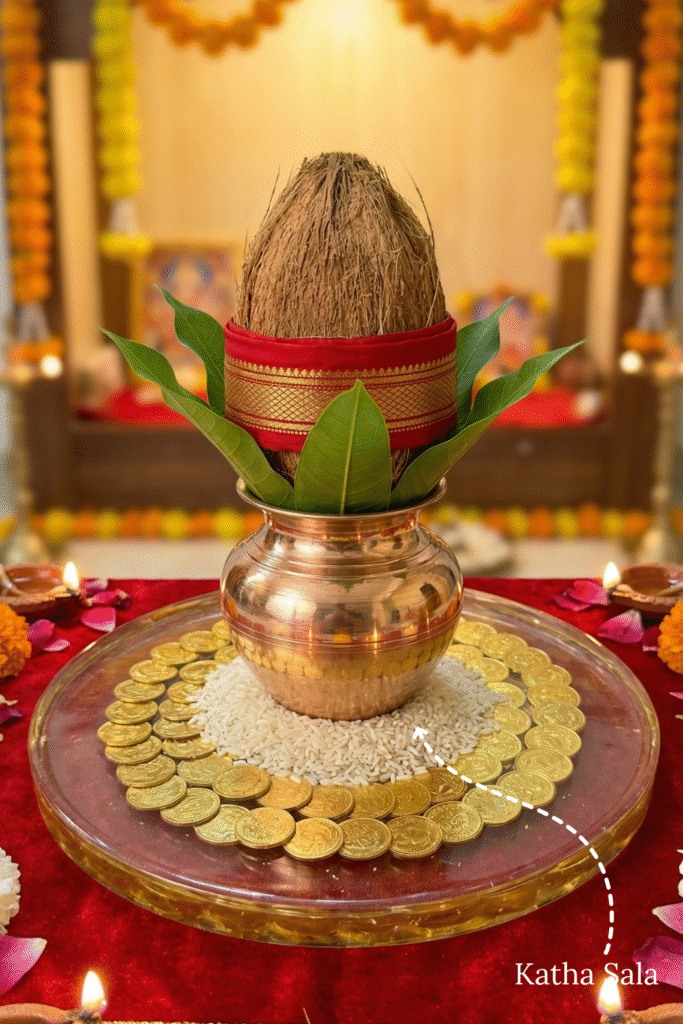
Many people make the mistake of placing their Kalash directly on the floor or on a piece of cardboard. According to Vastu Shastra, this is a significant error.
The Law of Grounding
Spiritual energy, or Tejas, flows through the items used in a puja. The earth has a natural grounding property. If a consecrated item like a Kalash touches the bare floor, the high-frequency vibrations are absorbed by the ground rather than radiating through your home.
The Role of the “Asana”
Just as we sit on an Asana (mat) to meditate, the Kalash requires a Peeta (pedestal) or a Chowki (stool). An elevated platform:
- Insulates the Energy: Keeps the divine vibrations within the vessel.
- Shows Respect: Elevates the deity above our own physical seating level.
- Corrects the Direction: A Peeta allows you to precisely align the Kalash in the North-East (Ishan) corner without it being obstructed by other items.
Kalash Sthapana Material Checklist & Significance
| Component | Ritual Significance | Essential Item Needed |
| Foundation | Stability & Insulation of Energy | Lakshmi Peeta or Chowki |
| Vessel (Kalash) | The Universal Body | Copper, Brass, or Silver Pot |
| Water | The Life-Force (Prana) | Pure Water + Ganga Jal |
| Base Grains | Fertility and Growth | Raw Rice (Akshata) or Wheat |
| 5 Leaves | The Five Elements of Nature | Mango or Betel (Paan) Leaves |
| Coconut | Divine Consciousness | Fresh Coconut (Shripal) |
| Sacred Thread | Protection (Raksha Sutra) | Red Kalawa / Mouli |
3. Comprehensive Step-by-Step Kalash Sthapana Vidhi
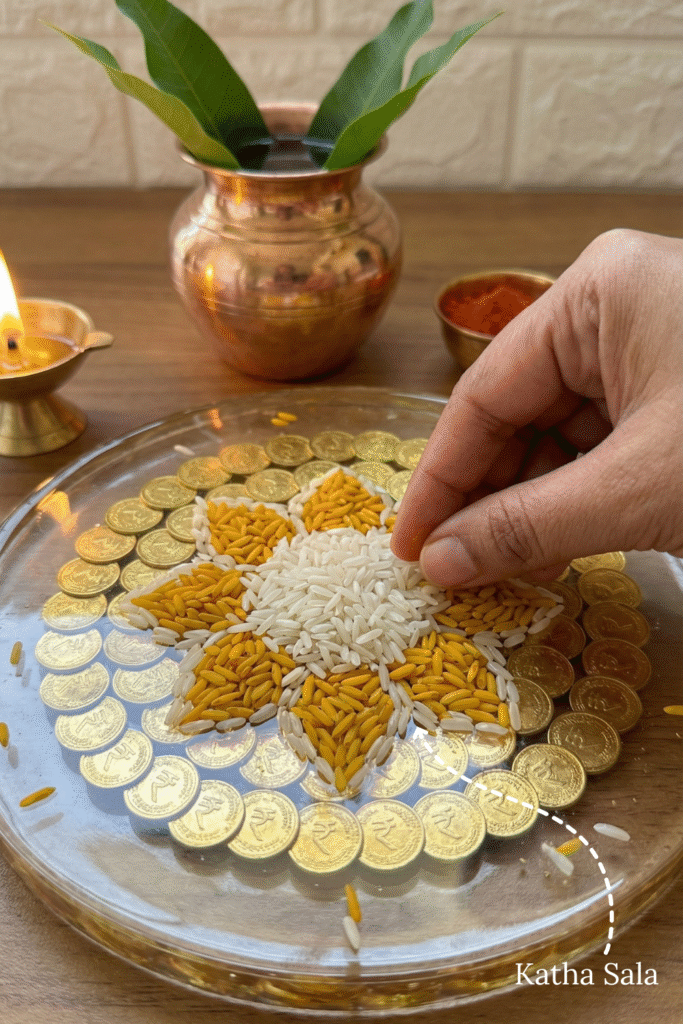
To perform the ritual correctly, follow these precise steps:
Phase 1: Preparation of the Base
Cleanse the North-East corner of your Mandir. Place your Lakshmi Peeta or Designer Chowki here.
- Pro-Tip: Ensure the Peeta is stable. A wobbling Kalash is considered inauspicious as it represents instability in thoughts and wealth.
Phase 2: The Bed of Grains (Dhanya)
Place a small mound of raw, unbroken rice (Akshata) or wheat on the center of the Peeta. Arrange it in a circular shape or a small “lotus” pattern. This represents the fertility of the earth.
| Vastu Aspect | Recommended Direction/Method | Spiritual Benefit |
| Primary Direction | North-East (Ishan Kon) | Attracts Wisdom & Peace |
| Alternative Direction | East | Attracts Health & Vitality |
| Placement Level | Above the Floor (On a Peeta) | Prevents Energy Grounding |
| Coconut Direction | Facing Devotee or Upwards | Directs Blessings to the Family |
| Grains Base | Circular or Lotus Shape | Represents Infinite Prosperity |
Phase 3: Preparing the Kumbha
Fill your copper or brass Kalash with clean water. Add a few drops of Ganga Jal if available. Inside the water, drop:
- A Coin: Symbolizing Goddess Lakshmi and material prosperity.
- A Betel Nut (Supari): Representing the removal of obstacles (Lord Ganesha).
- Turmeric & Kumkum: To sanctify the water.
Phase 4: The Five Elements
Place five or seven Mango leaves (Amra-Patra) or Betel leaves around the rim. Ensure the tips of the leaves touch the water. These leaves act as “antennas” to catch the divine energy.
Phase 5: The Shripal (Coconut)
Wrap a fresh coconut in a red cloth or tie it with Kalawa (sacred thread). Place it on top of the leaves. The “eyes” of the coconut should face the ceiling or the devotee.
4. Why the Katha Sala Lakshmi Peeta is the Modern Devotee’s Best Choice
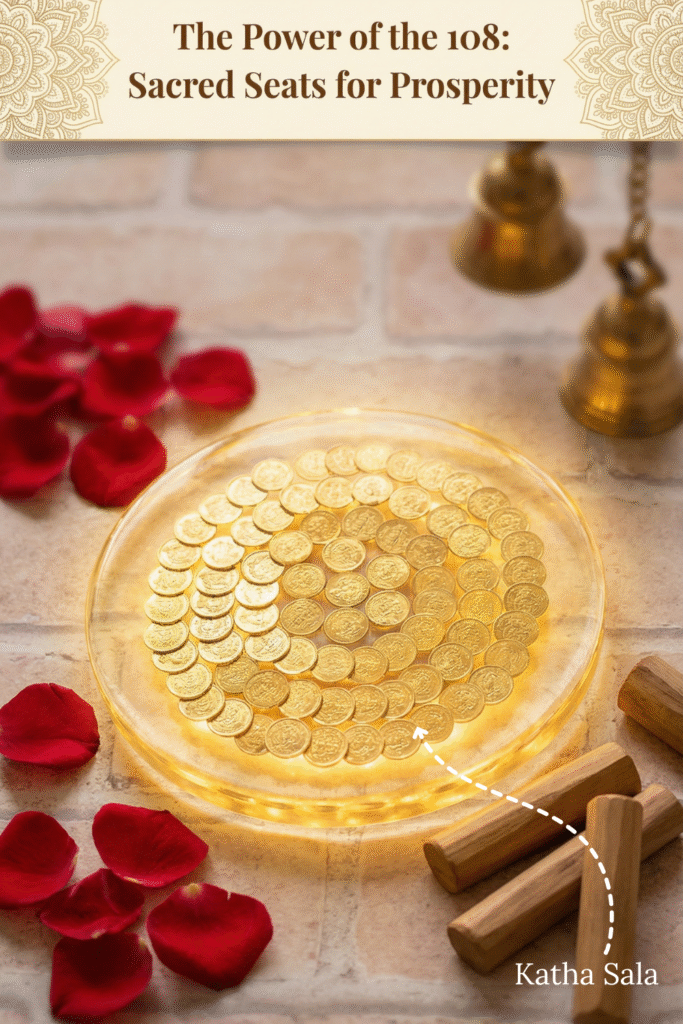
Traditional wooden chowkis have been used for centuries, but modern homes face modern challenges. If you are serious about your Puja room’s longevity and Vastu, the Lakshmi Peeta featured on Katha Sala is the ultimate solution.
| Feature | Traditional Wood | Katha Sala Peeta |
| Water Resistance | Absorbs water, rots, and grows mold. | 100% Waterproof; water beads off the surface. |
| Oil/Turmeric Stains | Permanent stains that look messy. | Stain-Proof; easily wipes clean with a damp cloth. |
| Durability | Cracks over time due to weather. | Indestructible; will not crack or lose color. |
| Design | Basic and plain. | Patented Sacred Art; designed to look like a jewel. |
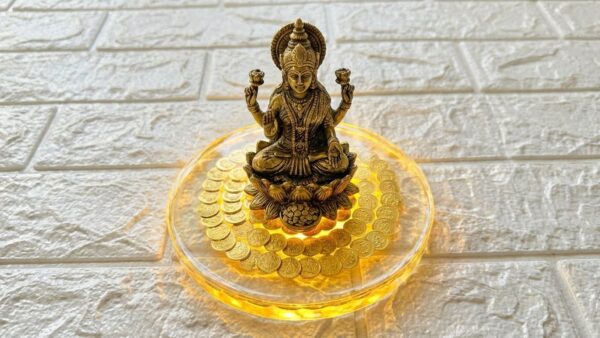
The Patented Advantage: Our Lakshmi Peeta isn’t just a stand; it’s a Design-Patented piece of spiritual art. This ensures you are getting an original creation that has been crafted specifically for the energy of Goddess Lakshmi.
5. Maintenance: How to Care for Your Sacred Kalash Space
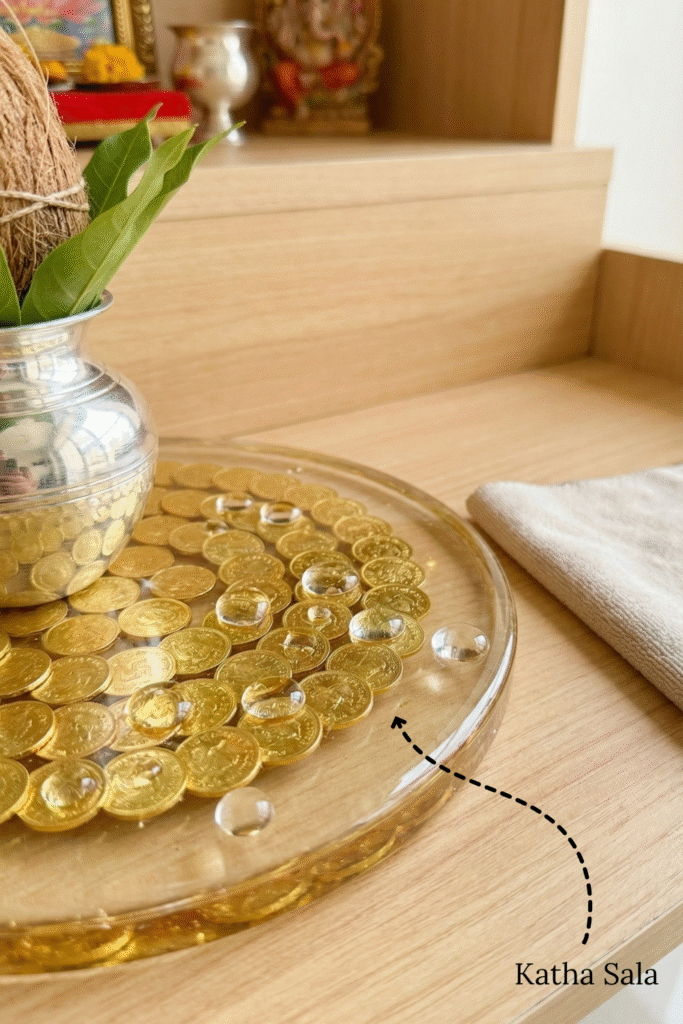
A clean puja room is a magnet for positive energy. Since the Kalash involves water, spills are inevitable.
- Cleaning the Peeta: If water or oil spills on your Resin Lakshmi Peeta, simply use a soft microfiber cloth to wipe it. Avoid harsh chemicals; plain water is enough.
- Disposing of Ritual Items: After the puja is complete, pour the Kalash water into the roots of a Tulsi plant. This returns the energy to nature.
6. Conclusion: The Foundation of Devotion
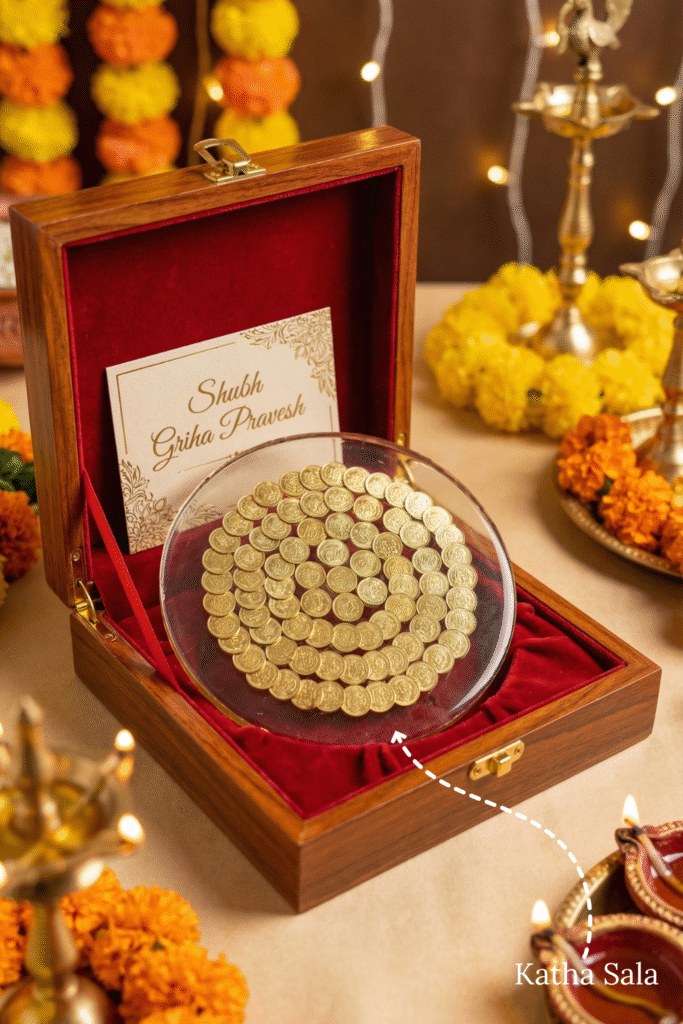
The ritual of Kalash Sthapana is a reminder that we are all connected to the divine source. By choosing the right tools—a metal Kalash, pure water, and a Vastu-compliant Lakshmi Peeta—you are telling the universe that you are ready to receive its abundance.
Elevate your spiritual practice today. Don’t let your deities sit on the floor. Give them the “Simhasana” (throne) they deserve.
Browse the Full Collection of Lakshmi Peetas and Idol Stands at kathasala.com
-
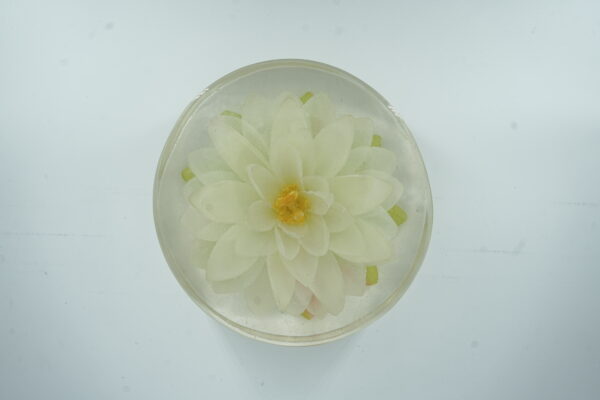
Brahma Kamal Flower Idol Stand for Pooja Room
Original price was: ₹3,599.00.₹2,499.00Current price is: ₹2,499.00. -
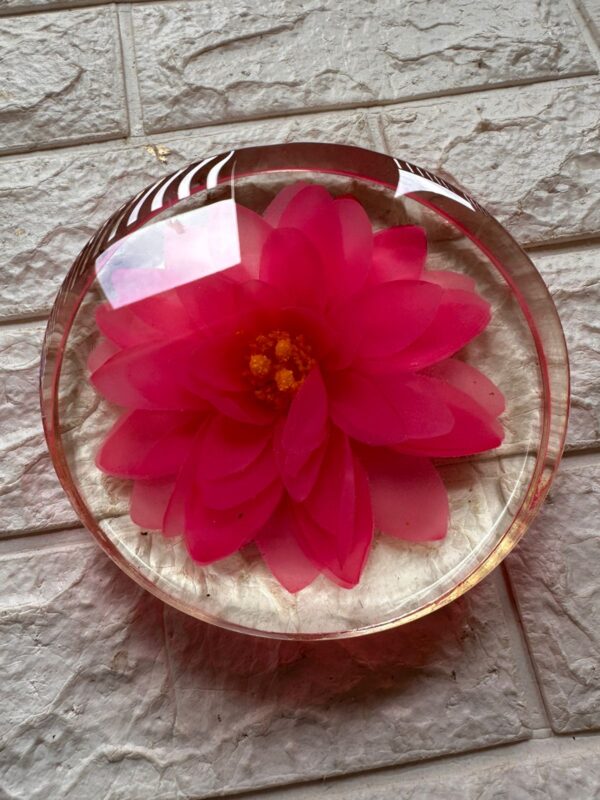
Lakshmi Kamal Flower Idol Stand for Pooja Room
Original price was: ₹3,599.00.₹2,499.00Current price is: ₹2,499.00. -
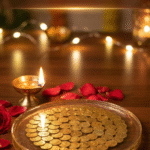
Lakshmi Peeta Idol Stand with 108 Lakshmi Kubera Coins
Original price was: ₹2,699.00.₹1,499.00Current price is: ₹1,499.00.
Also Check Out This Video For More:
Frequently Asked Questions (FAQ)
1. What is the correct direction for Kalash Sthapana?
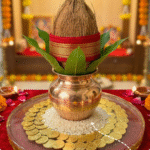
According to Vastu Shastra, the Kalash should always be placed in the North-East (Ishan Kon) corner of the puja room. This is the corner of the water element and divine consciousness. If the North-East is unavailable, the East is the next best direction.
2. Why is a Peeta or Chowki used for Kalash Sthapana?

A Kalash represents the seat of all deities. In Vedic rituals, placing a sacred object directly on the ground is believed to “drain” its spiritual energy into the earth. Using a Lakshmi Peeta or a wooden chowki acts as a spiritual insulator, ensuring the Prana (energy) remains concentrated within the Kalash.
3. Which direction should the coconut (Shripal) face on the Kalash?
This is one of the most debated questions. Traditionally:
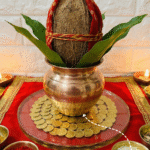
The “eyes” or the head of the coconut should face the devotee (the person performing the puja) to provide blessings.
Alternatively, it can face upwards toward the sky to connect with cosmic energy.
Vastu Warning: Never let the coconut face downward, as it is considered inauspicious.
4. What are the essential items to put inside the Kalash water?
For a complete Kalash Sthapana Vidhi, the water (symbolizing the source of life) should contain:
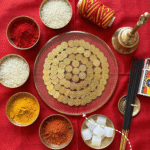
Ganga Jal: For purification.
Supari (Betel Nut): To invoke Lord Ganesha.
A Coin: To invoke Goddess Lakshmi for prosperity.
Haldi-Kumkum: For auspiciousness.
A Durva grass blade or a flower: To keep the water sacred.
5. Which leaves are best for Kalash Sthapana?
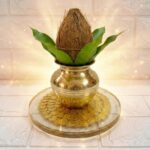
Mango leaves (Amra-patra) are the most common and preferred choice because they stay fresh for a long time and symbolize fertility. If mango leaves are unavailable, Ashoka leaves or Betel leaves (Paan) can be used. Usually, 5, 7, or 11 leaves are arranged in a circular pattern.
6. Can we do Kalash Sthapana at night?

Generally, Kalash Sthapana is performed during Shubh Muhurats (auspicious timings) in the morning or during Abhijit Muhurat. For specific festivals like Navratri, the Sthapana must be done during the specified Ghatasthapana window. It is usually avoided at night unless it is a specific Tantric or midnight ritual like Maha Shivaratri.
7. What should I do with the Kalash water and coconut after the Puja?
After the Visarjan (completion) of the ritual:
The Water: Sprinkle it in every corner of your house to spread positive vibrations, then pour the rest into the roots of a Tulsi plant.
The Coconut: It is considered Prasadam and should be shared with family members.
The Grains: Feed the rice or wheat used as the base to birds.
8. How to prevent the Kalash from leaking or the base from rotting?

Since Kalash Sthapana involves water and moisture, traditional wooden bases often get damaged or develop mold. This is why many modern devotees are switching to Resin Lakshmi Peetas. These are 100% waterproof, meaning spills from the Kalash won’t damage the stand or create a mess in your Mandir.