
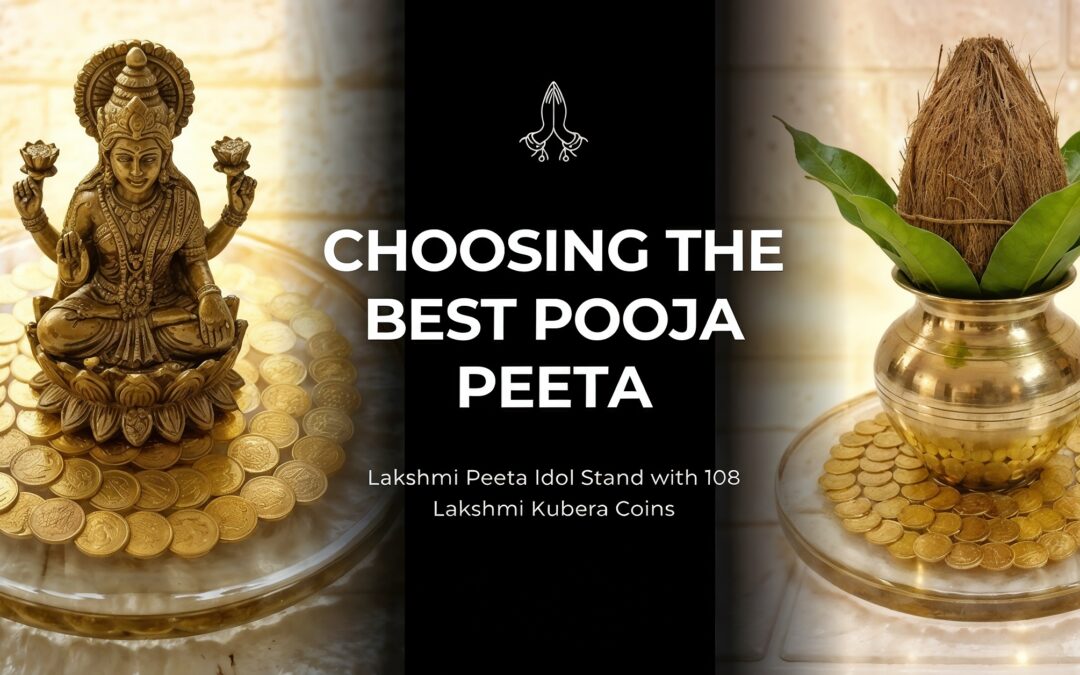
In every Hindu household, the Pooja room is more than just a space; it is the spiritual anchor of the home. At the heart of this sacred sanctuary lies the Pooja Peeta (also known as a Pooja Chowki or Mane). This elevated platform is not merely a piece of furniture—it is a symbolic throne for the divine.
Whether you are setting up a new home or looking to enhance your existing meditation space, choosing the right Best Pooja Peeta is essential for maintaining the sanctity and Vastu of your home. In this in-depth guide, we explore everything you need to know about this vital spiritual accessory.
What is a Pooja Peeta?
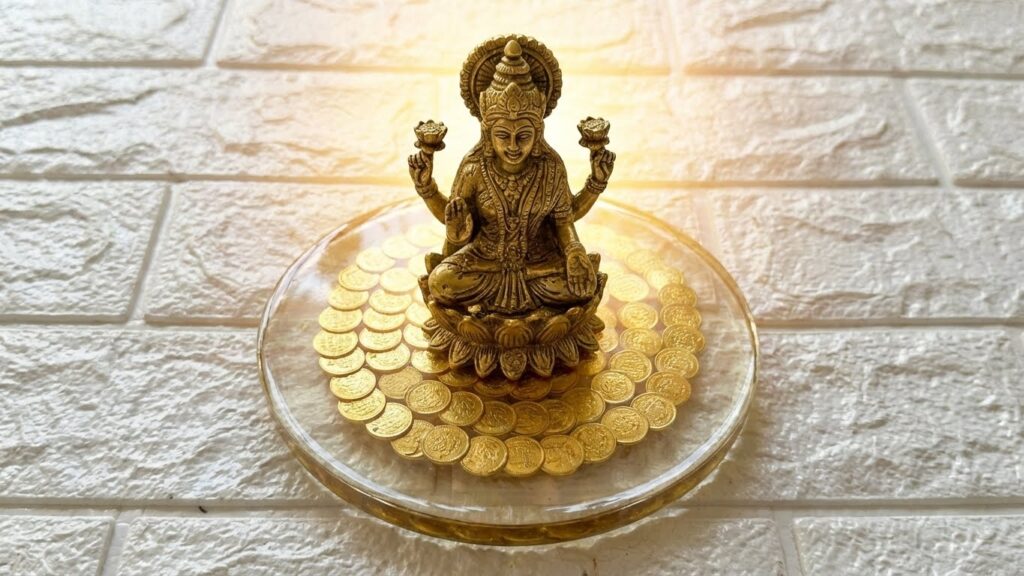
A Pooja Peeta is a raised platform, usually made of wood, metal, or stone, used to place deities, lamps (diyas), and sacred offerings during worship. In different parts of India, it is referred to by various names:
- Pooja Mane: Common in Karnataka.
- Pooja Chowki: Widely used in North India.
- Asana: A general Sanskrit term for a seat or platform.
Elevating the idols from the ground is a sign of respect and ensures that the divine energy is concentrated at an eye-level height for the devotee.
The Spiritual Significance of Using a Pooja Peeta
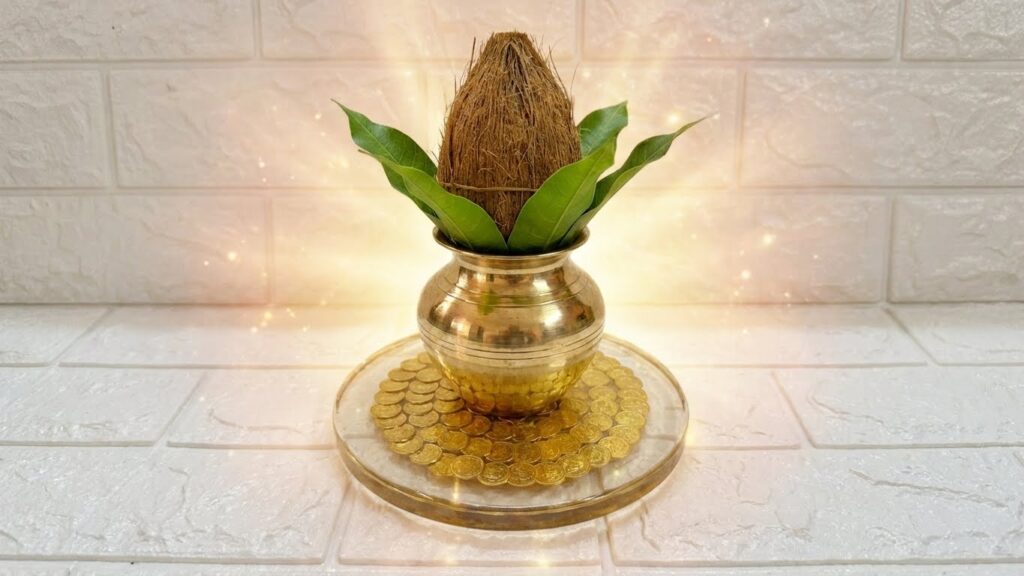
In Vedic traditions, the ground is considered a neutral plane, while a raised platform creates a “Sattvik” (pure) zone. Using a Peeta offers several spiritual benefits:
- Symbolism of Respect: Just as we offer a seat to an honored guest, a Peeta serves as a respectful “Aasana” for the Kalash & God idols.
- Energy Flow: A raised platform helps in the better circulation of positive vibrations throughout the room.
- Focus and Mindfulness: When idols are placed on a Peeta, they become the focal point of the room, aiding in concentration during Dhyana (meditation).
Choosing the Right Material: Wood, Marble, or Resin?
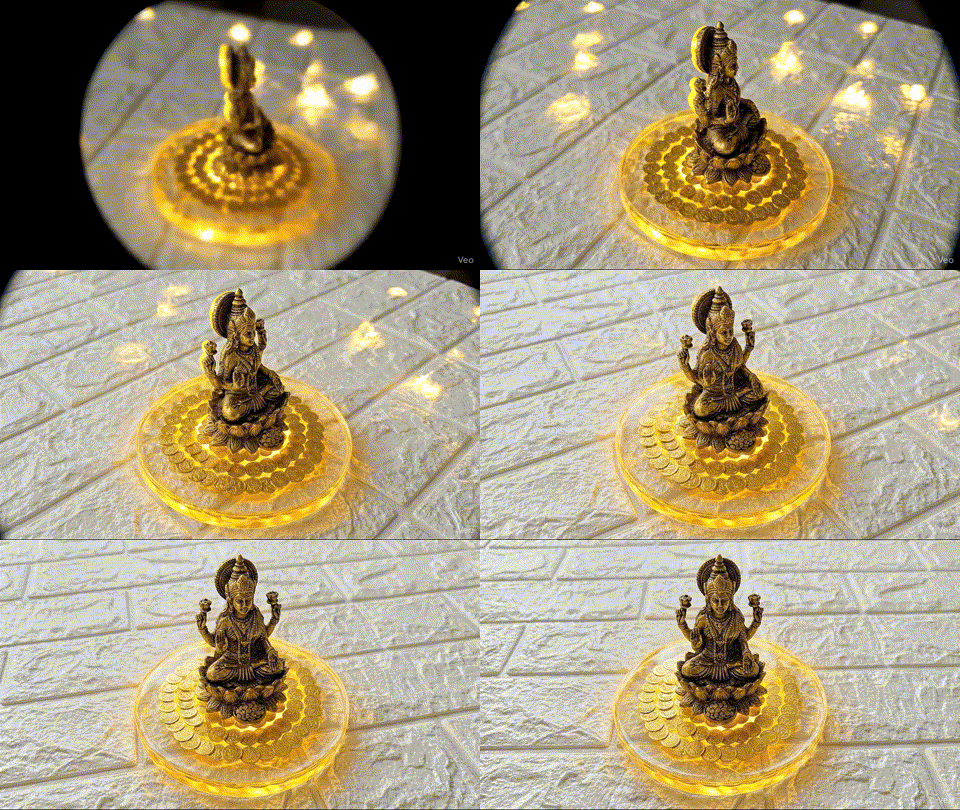
The material of your Pooja Peeta plays a significant role in the aesthetic and spiritual vibe of your temple.
| Material | Key Benefits | Best For |
| Teak Wood | Naturally warm, durable, and highly auspicious according to Shastras. | Traditional homes and heritage decors. |
| Marble | Symbolizes purity and stays cool; very easy to clean. | Large dedicated Pooja rooms. |
| Brass/Copper | Excellent conductors of energy; adds a regal, antique look. | Small apartments or shelf-mandirs. |
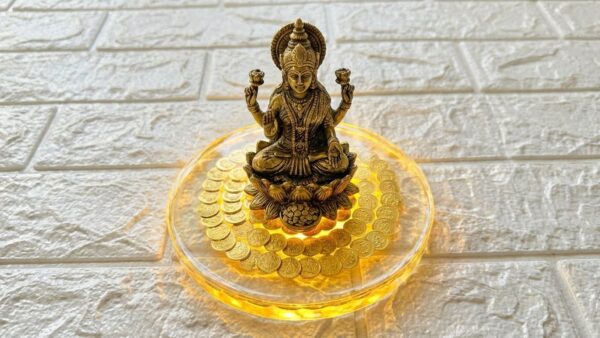
| Resin Art | Highly customizable; can include sacred symbols (like the Lotus or Om) embedded in the design. Ex: (Lakshmi Peeta by Katha Sala) | Modern, artistic homes. |
Vastu Shastra Tips for Placing Your Pooja Peeta
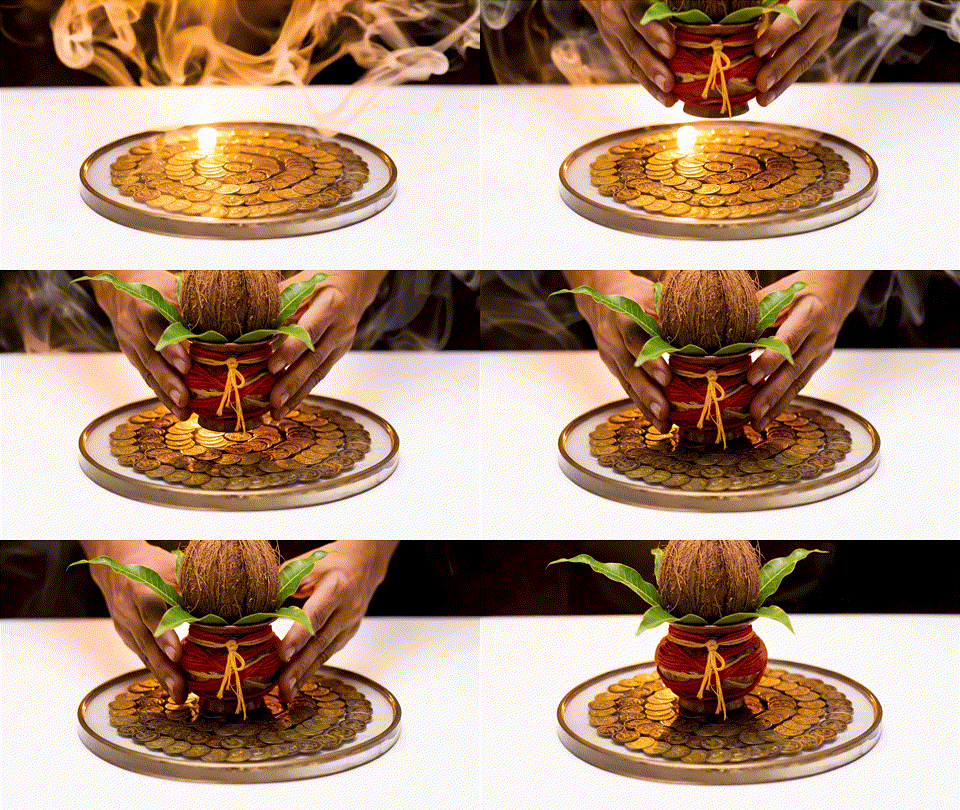
To maximize the flow of “Prana” (life force) in your home, Follow these Idols Vastu Guidelines:
- Direction: Always place your Pooja Peeta in the North-East (Ishanya) corner of the house.
- Facing: The devotee should ideally face East or North while performing rituals.
- Height: Ensure the Peeta is placed at a height where the base of the idols is at the level of the devotee’s chest.
- Avoid: Never place the Pooja Peeta against a wall shared with a bathroom or under a staircase.
Design Trends in 2026: Modern Meets Traditional
The modern Pooja Peeta has evolved. While traditional hand-carved wooden designs remain timeless, many homeowners are now opting for:
- Laser-Cut Jaali Work: Intricate patterns that look stunning when backlit.
- Minimalist Floating Peetas: Wall-mounted platforms that save floor space in urban apartments.
- Inlaid Motifs: Peetas featuring gold leafing or semi-precious stone inlays of Peacocks, Lotuses, or Kalashas.
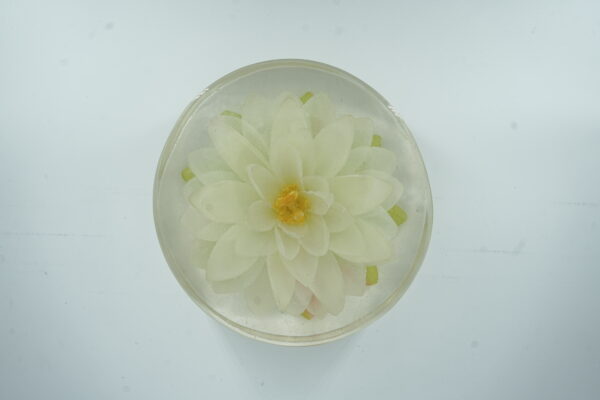
-
Brahma Kamal Flower Idol Stand for Pooja Room
Original price was: ₹3,599.00.₹2,499.00Current price is: ₹2,499.00. -
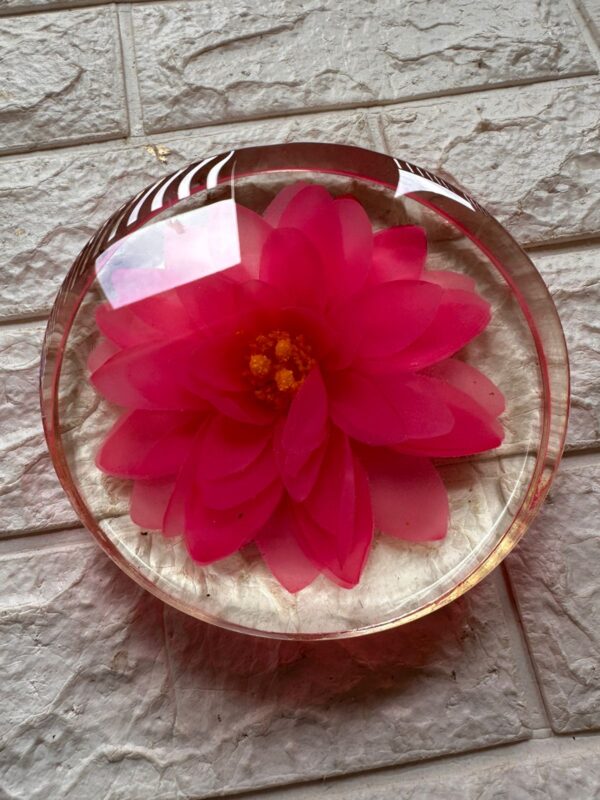
Lakshmi Kamal Flower Idol Stand for Pooja Room
Original price was: ₹3,599.00.₹2,499.00Current price is: ₹2,499.00. -
Lakshmi Peeta Idol Stand with 108 Lakshmi Kubera Coins
Original price was: ₹2,699.00.₹1,499.00Current price is: ₹1,499.00.
How to Care for Your Pooja Peeta
To maintain the shine and sanctity of your platform:
- Daily Dusting: Use a soft, dry microfiber cloth to remove incense ash.
- Avoid Harsh Chemicals: For wooden Peetas, use a drop of coconut oil or specialized wood polish to maintain the luster.
- Clean Oil Spills: Use a damp cloth immediately if oil from the Diya spills, especially on marble or untreated wood, to prevent permanent staining.
Check Out This Video for More:
Conclusion: A Pooja Peeta is the bridge between the material world and the divine. By choosing a platform that aligns with both your home’s decor and Vastu principles, you create a space that radiates peace and prosperity.
Are you looking for a custom-designed Pooja Peeta that reflects your spiritual journey? Whether it’s a classic Teak wood Mane or a contemporary Resin Art piece, make sure it is a reflection of your devotion.
FAQs on The Best Pooja Peeta
1. Why should we use a Pooja Peeta instead of placing idols directly on a shelf?
In Hindu tradition, placing a deity directly on the floor or a plain shelf is considered disrespectful. A Pooja Peeta acts as a “Simhasanam” (throne), elevating the divine energy and creating a designated sacred space that is separate from the rest of the household furniture.
2. Which wood is best for a Pooja Peeta?
Teak wood and Rosewood are considered the most auspicious and durable materials for a Pooja Mane. They are resistant to moisture and pests, ensuring that the platform remains sturdy for decades. For specific rituals, Sandalwood is also highly prized but is generally used for smaller idols.
3. Can I use a metal Pooja Peeta for daily worship?
Yes, metal Peetas—especially those made of Brass, Copper, or Bronze—are excellent for daily worship. These metals are known for their ability to conduct spiritual vibrations. However, ensure they are polished regularly to prevent tarnishing from contact with water or sandalwood paste.
4. What is the ideal size for a Pooja Peeta?
The size depends on your space and the number of idols. Standard sizes range from 8×12 inches to 18×24 inches. Ideally, the Peeta should be large enough to accommodate the main idol and a small lamp (Diya) without looking crowded. There should be at least an inch of space around the base of the idol.
5. Can a Pooja Peeta be used for meditation (Dhyana)?
Absolutely. While smaller Peetas are for idols, larger, low-profile wooden platforms (often called Pooja Manes) are used as seats for practitioners. Sitting on a wooden platform during meditation helps “insulate” your energy from the ground, allowing for deeper focus.
6. How do I clean a resin or marble Pooja Peeta?
For Resin or Marble, avoid acidic cleaners like vinegar or lemon, as they can dull the surface. Use a soft, damp cloth with mild soapy water. For Resin Art Peetas, a quick wipe with a microfiber cloth is usually enough to maintain its high-gloss finish.
7. Is it okay to gift a Pooja Peeta for a Housewarming (Griha Pravesh)?
Yes, a Pooja Peeta is considered one of the most thoughtful and auspicious gifts for a Housewarming ceremony or a wedding. It symbolizes a wish for the recipient to establish peace and divinity in their new home.